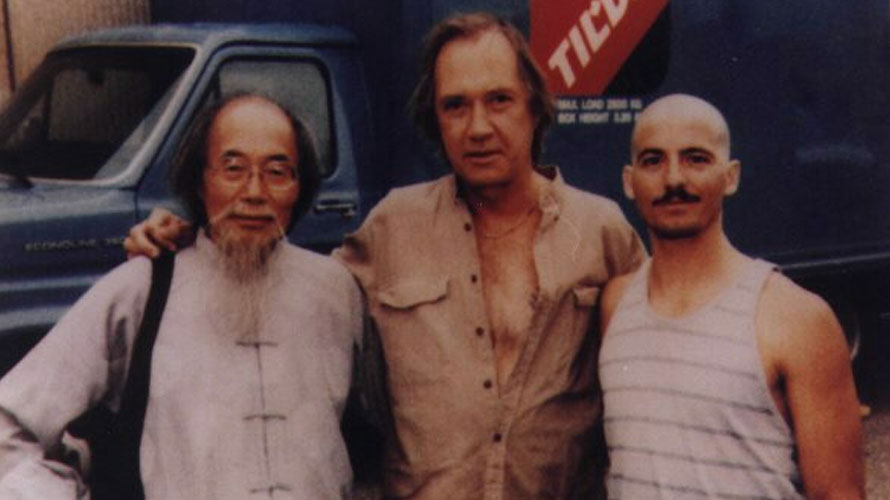
Actor Kim Chan was the Ancient on the TV show Kung Fu the Legend Continues with David Carradine,
Once upon a time, I was shopping for a therapist. I met a few along the way but there’s only one I remember. I fondly refer to him as The Ancient One. I named him after Kim Chan’s wise old man character ‘The Ancient’ in Kung Fu, The Legend Continues.
He mucked up.
We had three sessions altogether. The first one was fine. But he completely forgot the second. He did apologise, said he didn’t note it in his diary and scheduled a replacement. Sounds reasonable.
Yet, despite his apology, taking responsibility and making up for it, I was angry. I kept thinking, “How could he forget me?”, “How could he abandon me?”, “Aren’t I important?”
He restored psychological safety.
In our replacement second session, I thought I was succeeding at putting the anger behind me and making the most of our time. Turns out I was wrong.
When he asked, “What are you thinking?”, I said, “I’m thinking about the pattern on your carpet”. In my defence, I was looking at it. But he wisely and calmly said, “Oh, you’re too clever”. Clearly, I was being passive aggressive, and he knew it.
Eventually, when I said “What? Sorry, I didn’t hear you”, he simply said, “It’s hard to hear when you’re shooting bullets”. I thought, “He’s so onto me”. It was such a relief. It felt so good to simply be seen, and he wasn’t mean about my appalling behaviour. He stated the facts and patiently held the space for me until, let’s face it, I grew up.
The Ancient One was a master at attuned listening, and this not so proud moment of mine shows why it’s worth getting good at it. When someone is behaving badly like I was, if you listen carefully for the real meaning in the message and find a kind way to respond like The Ancient One, then you can quickly diffuse things and lay the foundation for a healthy relationship.
Of course, I wish I’d simply said how angry I was and couldn’t get past it but didn’t feel able to. I thought I really should be over it already and was embarrassed. His capacity to attune to me, to know what was really going on and acknowledge it in a way that I could hear, even though it took him several goes, made all the difference. It was only then that I could settle and bring more of myself to the session. He’d stepped up after mucking up, it was my turn.
How leaders risk psychological safety.
You might be thinking, but a workplace isn’t therapy land. You’re right, but a version of this happens in workplaces all the time. I can easily recall examples in my corporate career where I felt forgotten or abandoned or unimportant. Especially early on where I was, for example, excluded from a client meeting or put on the project nobody wanted. Maybe I’m unusual. But I don’t think so. It’s just expressed differently.
For example, it’s not uncommon for my clients to share that they wish they were taken more seriously, had a greater sense of agency or could somehow get a seat at the table. These feelings are ordinary.
And the most common situations where these feelings are evoked are in the postponed performance reviews and cancelled 1-1s. The message is clear. Something else is more important than you, at least at that time.
I know there are workplace imperatives that get in the way and can’t be helped. Please just be mindful of the potential impact on someone and the emotional labour they must do to come to terms with it. This is where I often see leaders unintentionally risking the psychological safety that they worked so hard to establish with their direct reports.
The Attuned Leadership Master.
I think I should rename The Ancient One to The Attuned Leadership Master. We had one more session. He thought he’d retire before our sessions would ideally end so it wouldn’t be right to start. He said, “I think you can do better for yourself”. Such a brilliant line. A kind way to say no.
I was sad I didn’t get to learn more from him, I’d learned so much in such a short time and wanted more. But it would have been worse if he’d retired on me prematurely. He took such good care, was so thoughtful and respectful. Yes, he’d mucked up one time, but that turned out to be such a gift.
How about you? I’d love to know what you think.