Articles

Is that really you?

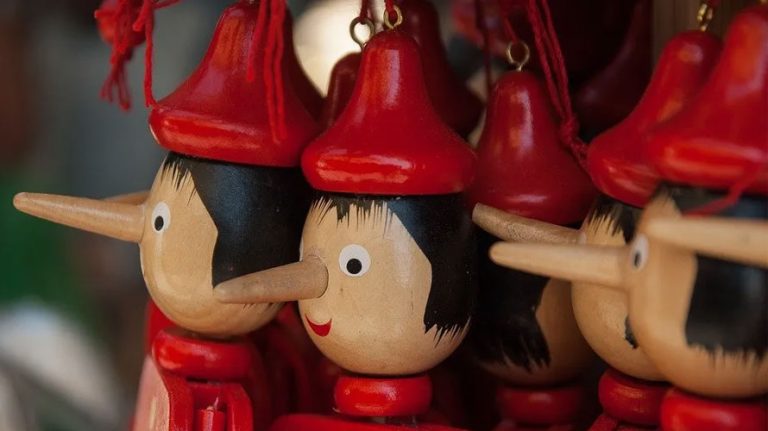
Do you have a nose like Pinocchio? Gosh, that was popular. I’m referring to the FREE Executive Presence eBook that I shared with you last week. [now updated]. Help yourself if you haven’t already. Simply click here and scroll down to get your updated copy. Recently, a client asked, before we’d met if I actually looked like my photo. You know, the one you see above. His concern was that I was doing what some allegedly do on those dating sites. When the person you meet is, at best, an older version of their online selves. At worst, they’re nothing like their online photo at all. They’re way less attractive. Yes, we all lie, normally just a little white kind of lie. And research has found that we all lie in those little white lie ways about twice a day. You know how when someone asks “how are you?”, and you say “I’m good” when you’re not? That kind of thing. Well, rest assured, my name is not Michelle Pfeiffer. I do look like my photo. Two exceptions, my hair is currently longer and my glasses are different. Still, I get it. You do want to put your best foot

Read More »
Executive Presence Reframed guide cover

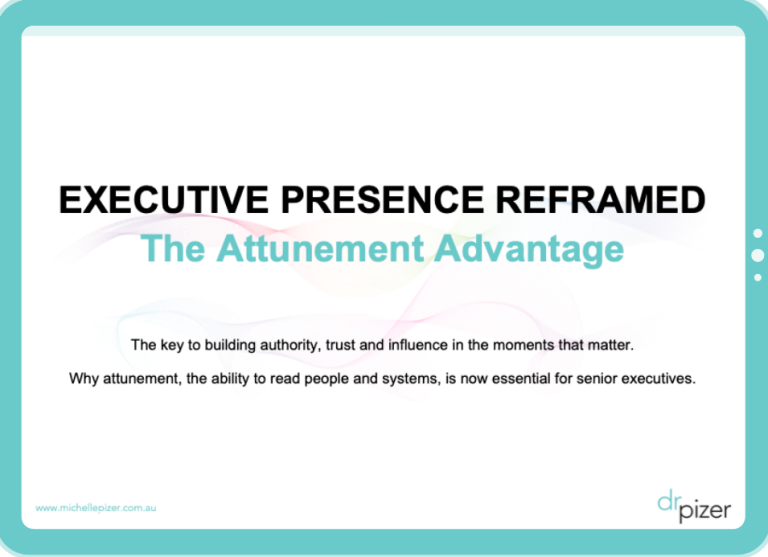
Do you want to master executive presence? A new resource for you

You know those networking events where you know nobody? Well, I thought, I won’t stand here like a gooseberry. That lady looks friendly, I’ll talk to her. So I moseyed on up and asked the standard “what do you do?” question. She happily replied, “I help leaders improve their executive presence”. Like so much corporate-speak, it sounds great but you’re often left wondering exactly what people mean. No surprise when it comes to executive presence. There’s no agreed-upon definition. But I was curious about her take on it, and so I asked. Turns out she didn’t know. Seriously. Shocking but true. I’m sure she had an inkling. But really, she just stumbled about with her words and got away from me as fast as she could. The lesson? Make sure you know your stuff.   Executive presence is something you need, that’s if you want to get ahead. It’ll put you on the fast track to success. Because, as you’ll discover, whether they know what it means or not: Big bosses look for it. Customers sense it. Staff respect it.   It sounds elusive but it’s actually a series of learnable skills that I share with you in my FREE

Read More »

Leaders choose their words carefully

What’s more Strine than a kangaroo? Our Year 11 maths teacher was running late one day. While waiting, Charlie, now a successful journalist and author, reached into his bag and pulled out the book Les Stalk Strine (it’s how someone with a heavy Aussie accent says: Let’s talk Australian). He kept us all entertained with rhyming slang. ‘Pass the dead horse’, for example, means pass the tomato sauce. Go figure! It’s all been on the back of the recent white anting post. It was rather popular, based on your emails and comments. So, I’ve been ‘flat out like a lizard drinking’ (extremely busy) thinking about what Aussie slang to share with you next. Because language matters. The words you choose influence how you’re perceived. Paul Keating, Australia’s 24th Prime Minister, was famous for being both entertaining and hurtful with his use of words. Regardless of your politics, his wit with words ensured that he was never ignored. Here’s classic Keating (from his collected insults), describing the then Opposition Leader John Hewson’s debating skills: It was the limpest performance I have ever seen … it was like being flogged with a warm lettuce. It was like being mauled by a dead

Read More »

What people see and what you secretly feel

Sneaking carrots. I’ve affectionately called these guinea pigs Erving and Goffman – for introducing me to the idea of front stage and back stage all those years ago. Are you one of those people who others tell their secrets to? More than average lately, people have been sharing their warning signs with me, that things are beginning to crack. That their front stage ‘positive, polite and professional at all times’ self is at risk. Backstage, here’s what’s really going on: A pain in their gut. Waking up in the middle of the night. Comfort eating. If someone burgled the house they wouldn’t even know, it’s such a mess. Who would know? That’s why it’s backstage. For now. The plan is to stop it getting on stage, and then to get it off stage completely. When what people see is more and more at odds with what you secretly feel, it’s time to get some extra support. It’s executive coaching for my clients – because the cause is work-related. Whatever it is, the way forward is to not go it alone. Rather, to know yourself well enough to realise that it’s time to put up your hand and get the help

Read More »

Room with a view

Today I’m working from a special slice of paradise – Mission Beach. It’s just south of Cairns, a hop, step and a jump to the Great Barrier Reef in Far North Queensland. I’m here for my friends’ wedding. Me and 107 other guests who’ve come to share their special day. This was the view from my room at sunrise this morning. That’s Dunk Island to the right. Views are prime real estate everywhere, and office-land is no exception. When I first started working, in the days before open plan, your office signified your status. In Melbourne, the biggest bosses had views of the Bay. They also had the biggest offices. In fact, you just had to count the ceiling tiles to know the level of the person whose office you were in. I kid you not! And people were very sensitive about having the right number of tiles. Proximity mattered too. The closer you were sitting to the biggest bosses, the more important you were. With more flexible work options, and thanks to technology, the status of who you’re with isn’t so clear. But you do have a greater choice of views. I’m not a fan of open plan, but

Read More »
Excited Colleagues Sharing News

How friendly are you with your colleagues?

When thinking about friends at work, it’s not as simple as whether you like someone or not. Work relationships are more complex. And here’s why. First, there’s the personal relationship with a colleague (aka frolleague) and how close you feel. There’s a range that goes something like this: Unfriendly. Friendly (eg. acquaintance). Friend. Close friend. Best friend. Intimate (eg. life partner).   You might ask yourself if that degree of closeness is too much, too little or just right for you. And if it’s not just right, what do you plan to do about that? Not so easy. (I was interviewed about frolleagues at work recently here.) Second, there’s the role-relatedness. This is where work friendships differ. There’s both a personal relationship and a work-role relatedness. That is, where you have a relationship by virtue of the roles you both occupy. You have to interact to get the work done. This gets even trickier because there are a few things to think about that aren’t so easy to think about. Maybe this is why it doesn’t get talked about nearly as much, and why ‘training’ doesn’t stick. It’s not just about whether you do a good job and co-operate. So,

Read More »

Wants come before needs

Looks like the right Puffin didn’t ask the left Puffin what they want first. What is it with those people who don’t care as much as you do about doing excellent work? Why don’t they? You employ them. You pay them. What more could they want? Well, one thing they certainly want, is to know that you’re doing everything you can, to help them get what they want, from the job and for their career. That doesn’t mean you pander to their every whim and fancy. It’s not about capitulating to their demands. But it is about asking what they want, first. Not automatically assuming that what you want, is also a great opportunity for them, (and that they really should be grateful!). Asking is a great way of showing that you care, and that you have their best interests in mind. Sometimes what they want is just what you and the organisation needs. That’s the dream scenario. When it’s not? Then you do what you can, when and where you can, to find the fit between their wants and your needs. And yes, it can require yet another difficult conversation. But in my experience, it’s worth it. You let

Read More »

Are you being held in mind?

It doesn’t matter how competent, capable and confident you are. There will always be things you can’t do on your own. It’s why the seemingly smallest of things can make all the difference: A phone call from a friend, especially when you feel a pang of the lonelies. Your boss taking the time to let you know what a great job you did on that presentation yesterday, and what they thought you did so well. The barrista remembering your name and how you like your coffee.   It can be anything. Seriously, anything that shows you’re seen, you matter and they care. That they hold you in mind. It never gets old. Why? Because it seems we can’t be reminded often enough of what William James so eloquently said: We are like islands in the sea, separate on the surface but connected in the deep. And so, my friend, be a friend and connect on the surface. What’s the smallest thing you can do today that just might make the biggest difference for someone in your world? Get in touch and let me know.   Photo by Campaign Creators on Unsplash.

Read More »

Avoidance is not a strategy

Scaredy cat It goes by many names, avoidance. ‘Head in the sand’, ‘in denial’ and ‘turn a blind eye’ come quickly to mind. There are more. Why so many versions? Because it’s so frustratingly prevalent! The most vanilla, least evocative and most corporate-speak version is ‘conflict averse’. And I’ve been wondering why I have such an aversion to it. And then it dawned on me. If you’ve ever worked for a conflict averse boss, the type who uses avoidance as a strategy, then you’ll know the words don’t come close to matching your experience. Like feeling ignored or unimportant. You want your boss to step up and take the tough decisions. You want them to have the difficult conversations and to be someone you respect, before being someone you like (although of course you want to like them too). But ‘conflict averse’ is a polite phrase and civility matters. And let’s be kind for a moment. Let’s think about why they’d be avoidant in the first place. It could be because they want to save face. It might be because they don’t know what to say. It could be that they know what to say, but they’re not sure how

Read More »

What makes useless meetings useful

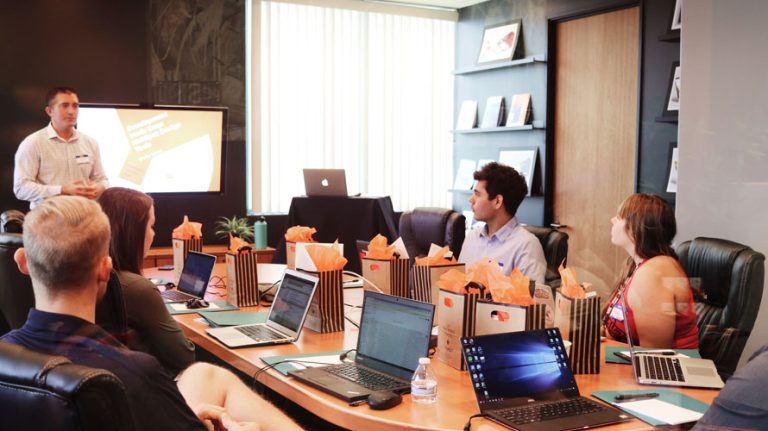
Recently, one of my clever clients with impressive technical skills, was complaining about the endless supply of useless meetings that make up his day. To him, they feel like a complete waste of time. But are they? Maybe. But, not if it’s an opportunity to build trust through spending time together. Or a chance to witness the underlying emotions and relational dynamics that can help or hinder a project. That kind of information, if you can use what you see, makes you one savvy leader. So, next time you’re in a meeting and thinking you’d rather be anywhere but here, an option is to get present instead. Are people getting to know each other and building trust? And what are you noticing? Things like who speaks first, who takes control, who tries to take control and fails, who people defer to and who they ignore, where people choose to sit. All the non-verbal expressions and patterns of relating. Assuming the players are at the table, you’ll learn who’s who in the zoo very quickly. Even who’s missing and the impact that has is revealing. Plus, it makes for a much more enjoyable day. Do you agree? Get in touch and

Read More »
Dr Michelle Pizer | Executive Coach and Organisational Psychologist