
Articles

Image of the three wise monkeys

How to Lead Clever People Who Do Dumb Things

Michael Watkins, author of The First 90 Days, suggests that the actions taken in the first three months of a new role largely determine whether someone succeeds or fails in the long term. If that’s true, then I was a lucky exception. Still failing after six months I didn’t mean to be difficult. But after six months of repeatedly asking my boss Harold (not his real name), “How much should I charge for this proposal?”, he’d had enough. I wrote a lot of proposals, and I’d nailed all the sections except pricing. It wasn’t deliberate. One day I went into his office with my usual pricing question. Harold looked at me with frustration, put his pen down rather too loudly on his desk, and said, clearly irritated: Look, you really should be able to do this by now. Somehow, despite my embarrassment, I replied: But I have no idea how you do it. It’s like magic. A blind spot, not a lack of intelligence Looking back, it’s almost endearing. But what mattered was what he did next. He took me metaphorically by the hand and showed me, step by step, how he worked it out. It was so simple it’s

Read More »

Why Marie Kondo-ing Your Emotions Makes Better Leaders.

One thing I’ve learned as a leader is that you’re wasting your time if you’re more ambitious for someone than they are for themselves. It doesn’t matter how much potential they have. It’s simply not your business. That doesn’t mean you do nothing. We’re still wired for growth. Here’s how you motivate the less ambitious and make it one of the best things you do: 1. They say no to a promotion. To make a positive difference, start by helping them grow in ways that matter to them. It’s their career, after all, not yours. It’s what’ll motivate them, even if what they want isn’t what you want. I had a team member once; let’s call her Jenny. When I asked her about what she wanted for her career and where she saw herself going, she said, “This. For now, I just want this”. What? Being ambitious, this made no sense to me. Jenny was great. She had potential, and I wanted to promote her into a new position. Didn’t she want that for herself? To realise her potential? Perhaps, but not at that time. I may have been the boss of the department, but Jenny was the boss of

Read More »

How do you get back to psychological safety after what happened?

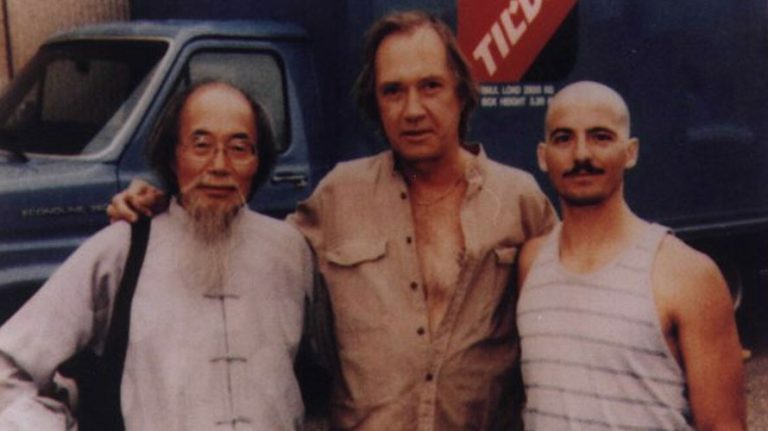
Actor Kim Chan was the Ancient on the TV show Kung Fu the Legend Continues with David Carradine, Once upon a time, I was shopping for a therapist. I met a few along the way but there’s only one I remember. I fondly refer to him as The Ancient One. I named him after Kim Chan’s wise old man character ‘The Ancient’ in Kung Fu, The Legend Continues. He mucked up. We had three sessions altogether. The first one was fine. But he completely forgot the second. He did apologise, said he didn’t note it in his diary and scheduled a replacement. Sounds reasonable. Yet, despite his apology, taking responsibility and making up for it, I was angry. I kept thinking, “How could he forget me?”, “How could he abandon me?”, “Aren’t I important?” He restored psychological safety. In our replacement second session, I thought I was succeeding at putting the anger behind me and making the most of our time. Turns out I was wrong. When he asked, “What are you thinking?”, I said, “I’m thinking about the pattern on your carpet”. In my defence, I was looking at it. But he wisely and calmly said, “Oh, you’re too

Read More »
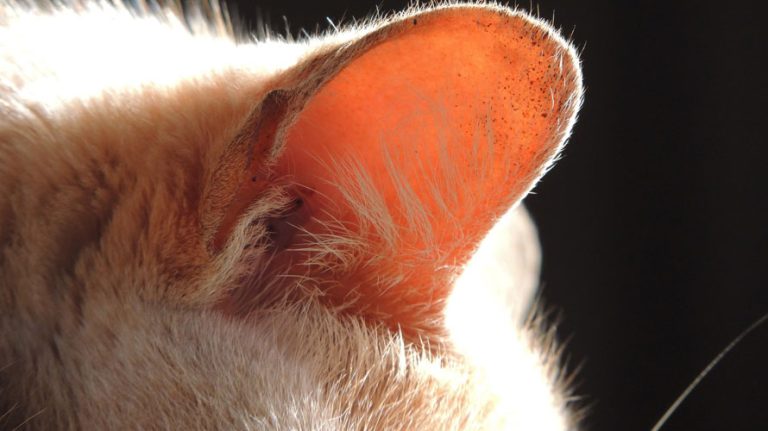
Close up image of the ear of a cat

What do the best leaders actually focus on when listening?

Peter (not his real name), founder and managing director of an IT company, had a hunch. The numbers weren’t stacking up. Results were disappointing, yet everyone was telling him things were fine. He trusted the data. Things clearly weren’t fine. When he asked for the real story, he kept hearing the same thing. Nothing’s wrong. Everything’s fine. Nobody would say why. Peter cared about working relationships and had always tried to be a good listener. So the disconnect was confusing and frustrating. Why were people holding back? That’s when he brought me in to help surface what wasn’t being said and make it discussable. That’s a brave move. When people aren’t telling you the truth, there’s usually a reason. Leadership can be lonely at the top. But not always. Not when you improve how you listen. Listening beyond the words At senior levels, listening isn’t just about hearing what’s said. It’s about noticing what’s not said, and why. That starts with attention. Not the performative kind, but the kind where you put your own agenda to one side long enough to really register what’s happening in the room. Tone. Hesitation. What people gloss over. What they soften. What they avoid

Read More »
Mother sitting cross-legged on the floor reading a picture book to a child

What good people leaders do differently

People leadership is shaped by context. Leaders work with experienced people, informal power and histories that affect how decisions land. What helps is noticing what is actually happening and responding in ways that hold over time. This is often when leaders look for executive coaching, not for answers, but for help thinking clearly about what will and won’t help. Back when I was first registering as a psychologist in the late 1980s, my supervisor said to me: One thing they never mention in any leadership books is that leaders are people first. Stopped me in my tracks at the time. It had never occurred to me, but she was right. Why good people leadership looks different in practice Formal authority is rarely enough on its own to get things done. It’s about inspiration, purpose, collaboration and accountability. But, as many leaders will tell you, that’s easier said than done. Many employees still don’t feel heard at work and some would rather leave than raise concerns. Why attunement matters in leadership This is why skillfully attuning to the people issues and mastering your human-centered skills as a leader matters in practice. Why relationships complicate leadership It’s challenging to be attuned because

Read More »
Are you lonely at work?

Are you lonely at work?

You’re not alone in feeling lonely at work. I’ve sure felt it. I remember most keenly the first day working at one of those big, professional consulting firms. One of the Big 4. It started with riding up in the elevator to a floor where your ears pop and you then step out onto a floor with lots of cold, hard surfaces and glass, glass and more glass. That just made the whole experience more daunting. I didn’t know anyone apart from my new boss who was nowhere to be seen. I was shown my desk by someone from HR and left with some reading material. That was the first hour. No wonder I felt lonely. That was until the person in the next cubicle came back to her desk, and said “Hi” and “What are you doing for lunch?”. The relief for me was palpable. It’s no surprise then, two whole years later, that I felt sad when she left the organisation. While I didn’t go to work to socialise, it sure made my days brighter having at least one person I trusted with more than my ‘game face’. Feeling lonely at work is an organisational concern As it

Read More »
Swear-words-at-work

Swear words at work

Is it ever ok to use swear words at work? I hear them often in my line of work. F-bombs are the most common. And, much to my own surprise, I’ve heard the C-word on a few occasions too! But it’s rare on a first meeting. That’s typically when people have their guard up a little more and are on their best behaviour. So, I was a little surprised when I met with a potential client who, on first meeting dropped a few F’bombs into the conversation. F*ck! F*ck! F*ck! He was recounting what he’d said while losing it with his female direct report recently. And then, she made complained to HR. After all, she’d done nothing wrong and she certainly didn’t deserve to be his verbal punching bag. Plus, this wasn’t the first time and she’d gotten to the point where she’d had enough. Her boss was told to shape up. And to his credit, he thought it was a fair call. That’s why we were talking. But I wondered why he was swearing with me on our first contact. I’m used to hearing, I dropped an F-bomb, not the words themselves: F*ck! F*ck! F*ck! Prudish or polite? Clearly

Read More »

Beware the comfort zone

My first job at the university newspaper was to write the back page of the next edition. It wasn’t what I’d signed up for. I’d agreed to doing layout. Not happy! Still, I felt obligated. I remembered seeing this mini-poster showing all the grammatical uses of the ‘F’ word. You know, noun, verb, adjective, adverb etc. with examples. I was a teenager, so all is forgiven. I blew it up to full-page newspaper size and took the risk. Next week it was all over campus. The risk paid off. I was told it was the best page of the whole paper. But I’d let myself down. The Comfort Zone (not so comfortable) I couldn’t bask in my new found glory. Why? Because I knew the real reason I wanted to do layout was because I was too scared to write. The ‘F’ word page was lazy, I didn’t write a single word. It was an adolescent protest for not being given the layout gig. I wish I knew then what I know now. Instead, I quit. We don’t usually have the luxury of quitting our jobs when we’re adults. But we do have the luxury of kidding everyone around us

Read More »

Story of a cancer survivor, what helps (and what doesn’t)

This story of a cancer survivor is mine. I’m now 12 years free from breast cancer. Thank goodness. I don’t think I can use words to do justice to the experience of having a life-threatening illness with treatment that nearly kills you (so it kills the cancer) and has horrendous side effects.So, when someone found out what I’d been through they emailed me suggesting that: it may be good to discuss how supervisors/employers/co-workers can make this horrifying experience [cancer treatment] more…how should I say it…endurable? Even the use of the words ‘horrifying experience’ and ‘how should I say it…endurable?’ let me know someone emotionally skilled, sensitive, and empathic wrote the email. And having had people say things that really hurt and I’ve never been able to forget, I think it’s important for people to know. So here goes… There are some stupid things people say to people with cancer: Like even before my treatment: “I’d always be worried it’s going to come back”; or: “My colleague worked all the way through her chemo” when getting to the letterbox was totally exhausting for me and became the highlight of my day when I made it there and back. Story of a

Read More »

This Is For You If You Hate Confrontation

You’re in a great mood. You just won a new client and you walk joyfully into the office with a spring in your step. Betty is the only one there, holding the fort. You’re grateful, she’s great at her job and she’s in line for a  promotion. But her promotion prospects are at risk because she’s super moody. And today is one of those days where your good mood, once again, is quickly soured. She looks up and gives you ‘The Look’. From what you know of Betty, this is the ‘Ask Me What’s Wrong’ look. Which you tell yourself is the ‘I’m about to ruin your good mood’ look. Of course you’re right. Just suspecting that your good mood is about to be ruined actually ruins it. So you cave. Rather than spreading the joy and sharing your good news, the first thing you say is: You: “Hi Betty, what’s wrong?” Betty: “I don’t feel well”. You think to yourself: What? Again? Is that really it? Why can’t she hold it together for a minute and ask me why I’m happy? And then, if it’s true, why can’t she simply say something like: ‘I’m really not feeling well. I

Read More »
Dr Michelle Pizer | Executive Coach and Organisational Psychologist