
Articles

dr michelle pizer

The Most Powerful Lesson From Someone I Nearly Wrote Off

It’s easy to overlook potential when it doesn’t come in the package you expect. Most leaders focus on skills gaps and performance metrics, but the real predictor of exponential growth is responsiveness. Here’s how I discovered this by accident. The Anna Experiment Some years ago I was told: “Anna is joining your team.” Anna, the one people described as a plodder, not someone to expect much from. She’d been at the same level for years. That didn’t thrill me. We were understaffed, and the workload was high. So I hovered. Not because I wanted to micromanage, but because I genuinely didn’t know what I could delegate and how to best work with her. I asked endless questions: “Where are you up to?” “What did they say about Y?” “Have you thought of doing it this way?” Anna was probably a bit unsure of me at first. Fair enough. Turns out she was tired of being stuck and wanted to grow. So she did something smart. She paid attention to what my questions were really telling her about what mattered. It didn’t happen overnight. Over six months, I went from hovering to handing things over completely. And I couldn’t quite believe how well


Read More »
dr michelle pizer

You Don’t Need to Know the Answer. You Need to Know How to Figure It Out.

The leaders who thrive in uncertainty aren’t those who always have answers—they’re those who can think clearly when the path isn’t clear. The New Reality: When Experience Stops Being Your Guide The expertise that got you here isn’t enough anymore. AI is reshaping entire business models. Market conditions shift monthly. The playbook that worked last quarter doesn’t work this quarter. You’re not struggling because you lack capability—you’ve proven that already. The challenge is that the rules keep changing faster than anyone can master them. And in most organisations, admitting you don’t know still feels like a career risk. So what do you do? Fake it? Reach for quick answers and hope you can course-correct later? That path leads to decisions that need constant revision, teams that stop bringing up problems, and strategies built on shaky foundations. There’s a better way. Uncertainty as Intelligence: What Your Discomfort Is Telling You I remember that feeling as a junior consultant at EY—not knowing what I didn’t know. The anxiety made it impossible to think clearly. I couldn’t even figure out what questions to ask. As a senior leader, you’re different. You know how to navigate uncertainty in your domain. But when you’re facing

Read More »
dr michelle pizer

The Queen, the King or a Pawn? How to Know Which Role You’re Really Playing

She thought she was the Queen. Third from the top in a large organisation. Brought in to lead. Expected to deliver. But over time, she came to understand the role wasn’t what she signed on for. Staff challenged her authority, resisted direction and in some cases ignored her altogether. When she tried to act, especially to manage those unwilling to change, her boss stepped in. “But she’s lovely” the boss would say, defending the very people making her work impossible. Most of her team had decades of organisational history. She’d been there three years. And her boss? She started there fresh out of university and never left. She was promoted quickly through the ranks with little time at third from the top. Is that why she stayed too closely involved in every portfolio under her remit? My client wasn’t the only one suffering. The Promise of the Role At first, my client blamed herself. She assumed she’d missed something. Maybe she needed to be more confident. More relational. More strategic. It took her months to consider the possibility that it wasn’t her leadership. It was that people (and especially her boss) weren’t respecting the structure. And it took even longer again

Read More »
Woman sitting alone at work carrying an invisible workload at work

She delivered all week. No one noticed the cost.

In the space of a single week, one client: Nearly ended her relationship Missed out on buying a house Said goodbye to her closest work friend She didn’t take time off. She didn’t cancel our session. She led her team, delivered what mattered and kept showing up. Still her capable self. Just closer to the edge than usual. And that’s what struck me—not because it was unusual, but because no one knew. She didn’t drop any balls. She looked fine. This is the invisible workload leaders often miss. What it took to hold it together The work was solid. No obvious slips. Still thoughtful. Still on brief. But it cost her more than usual. She wasn’t thinking as quickly. Her energy was lower. Spent by the time she got home. She was holding herself steady—but only just. From the outside, it looked like business as usual. But the effort it took to maintain that? Exhausting. Performance tells you what got done. It doesn’t tell you what it took. When capable people carry too much People like her carry a lot. Not just their work, but yours too—your priorities, your deadlines, your expectations. They get things done. They don’t complain. And

Read More »
dr michelle pizer

A Wonderful Thing Happened 10 Minutes Before the Webinar

Here’s what happened. We Both Hate Being Late We were both early to the webinar. She was there before me, actually. I logged on 10 minutes early and there she was—camera on, cheerful, ready to go. She told me she hates being late. I was hosting a webinar that brought together leaders to explore what’s really happening at the top of complex organizations. We Clicked We got chatting. Nothing planned, just a warm hello and a bit of back-and-forth while we waited. She mentioned she’d been reading my newsletters since 2016. I was touched—and surprised. You never really know who’s listening or how long they’ve been quietly following along. I asked what she did and, hearing her American accent, where she was from. The conversation flowed naturally—two people finding common ground in caring about bringing out the best in others at work and helping them achieve their career goals. Without realising it, we’d stepped into what psychologists call liminal space—those in-between moments where real connection happens. No formal roles. No set agenda. Just two people talking before anything officially began. These kinds of unscripted moments matter more than we often realise. Sociologist Mark Granovetter found that new opportunities often come not through planned

Read More »
dr michelle pizer

Why Great Leaders Burn Out from Trying to be Fair

A client recently found herself up until 5am rewriting most sections of a tender. It was due at 3pm that day, and she still needed to hand it over in time for the budget owner to review the numbers before submission. She hadn’t planned to rewrite it. She’d set aside time for a final read-through and minor changes. The work had been delegated. She’d been assured it was on track. It wasn’t. What had been submitted didn’t meet the brief. It showed a lack of understanding of what she’d read—and it became clear she hadn’t read all the documentation in the first place. This leader had gone out of her way to support the team member responsible—offering flexibility, extending deadlines and checking in more often than usual. She knew they were struggling with their mental health. And they had confidently told her they were on top of it. It turned out to be misplaced trust. It wasn’t the first time she had to pick up the slack or give the benefit of the doubt. But this time, the cost was undeniable. Not just in lost sleep—but in realising that no matter how much slack she gave, it wasn’t going to

Read More »
Feeling out of place at work despite capability

What if it’s not imposter syndrome? Here’s how to know.

You’ve felt it. That quiet fear that you’re faking it. That you’re not really as capable as people think. That eventually, someone will realise you don’t belong and that they made a mistake. Most people call it imposter syndrome.And often, it is. But not always. What gets labelled imposter syndrome often has something else going on underneath. Sometimes it’s imposter syndrome.Sometimes it’s a trauma response.Sometimes it’s neurodivergence.Sometimes it’s more than one of these, tangled together. The feeling can look the same.What helps depends entirely on what’s underneath. When it really is imposter syndrome This is the version most people recognise. You get the promotion, deliver the presentation, hit the target, and still think: I just got lucky. You dismiss positive feedback. You work harder than necessary to prove you deserve your place. You quietly worry about being found out, even when the evidence says otherwise. It’s especially common when: You’re in a new or high-stakes role You’re surrounded by highly capable peers You’re the only one in the room by background, identity or experience You’ve always set a high bar for yourself A client once said to me, “I’m just waiting for someone to realise they’ve overestimated me.” She was

Read More »
dr michelle pizer

The Truth About Leading in Complex Systems

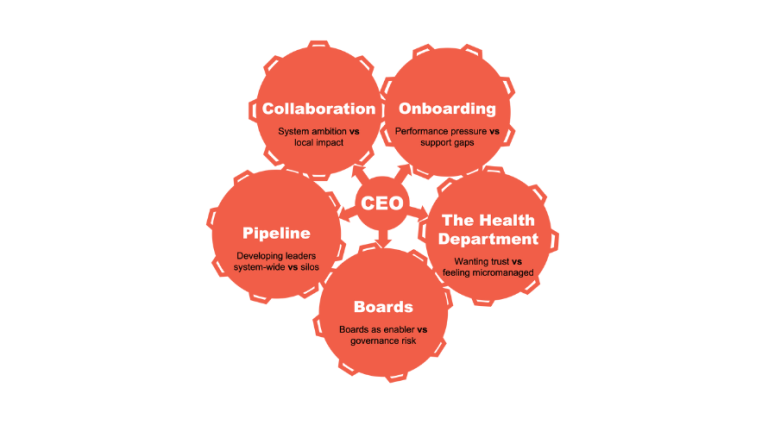
My recent research into Victoria’s public hospital CEOs reveals a leadership challenge that speaks to anyone leading in complex, high-stakes environments. The Commitment Is Extraordinary Over the last few months, I’ve been listening to Victoria’s public hospital CEOs share what it’s really like to lead in one of healthcare’s most demanding environments. What I discovered was both inspiring and concerning. These CEOs are deeply committed to their purpose. One told me with emotion that gave me goosebumps: No other job would allow me to be part of something so special. The Reality Is Unsustainable But beneath that commitment lies an unsustainable reality: My research indicates a concerning trend in CEOs signalling intentions to depart earlier than previously planned 53% of CEOs say LHSN reforms are already affecting their core performance and strategic priorities New CEOs are often left to “figure out what’s needed” with minimal support The leadership pipeline is fragmented, with directors unprepared for the next level The Costs Are Widespread The cost isn’t just personal. When experienced leaders leave earlier than planned, the effects are felt across patient care, staff stability, organisational memory and overall performance. As one CEO said: You lose momentum. You lose organisational memory. You slow down your ability to grow. I

Read More »
dr michelle pizer

You Followed the Process. Your Boss Didn’t. Now What?

It’s amazing how riled up people get when things feel unfair at work. This week, two clients. Very different situations, same sting. One had done her job—well—and was undermined for it. The other was told she wasn’t meeting expectations and would be finishing up. The decision didn’t surprise her. The way it was handled did. What they shared was this: fairness went missing. And I doubt either workplace would be proud of its impact. When Advice is Undermined The first client gave professional advice. It was considered, appropriate and exactly what her role called for. But her colleague didn’t want to hear it. Instead of addressing it directly, they went to the CEO. And the CEO backed them—without question, without conversation. She described it as a boys’ club. Not just the dynamic, but the protection it offered. They looked after their own. She’s now trying to hold on to what she knows is true: that she did her job properly. That she can’t control how others choose to respond. But when the right thing is ignored—and you’re being undermined—it takes effort to stay grounded. Especially when no one else acknowledges it. When Process is Ignored The second client had reached the

Read More »
Standing out at work

Leadership Gets Harder When You’re ‘One to Watch’

A client said something last week that stuck with me: I’m just not sure I’m hardy enough for this. She didn’t say it dramatically. It was more matter-of-fact, a quiet moment of doubt under leadership pressure from someone who’s known for being composed. The context? A restructure. A new boss who’s called her one to watch. More responsibility, higher expectations, less room to come up for air. She’s showing up. She’s delivering. But she’s tired. And quietly wondering if she can keep going at this pace, in this role, under this kind of scrutiny. Not because she can’t do the job. But because it’s changed. And so has what it asks of her. That kind of questioning is often where real growth begins. What hardiness actually means Hardiness is a psychological mindset made up of three elements: Commitment – staying engaged in what matters, even when it’s hard Control – believing you have some influence, even in difficult situations Challenge – viewing change as part of life, not something to avoid or fear It’s not about pushing through or pretending you’re fine. It’s about staying engaged under pressure, without shutting down or burning out. And this is key. Hardiness isn’t

Read More »
Dr Michelle Pizer | Executive Coach and Organisational Psychologist